


Every set writes itself down
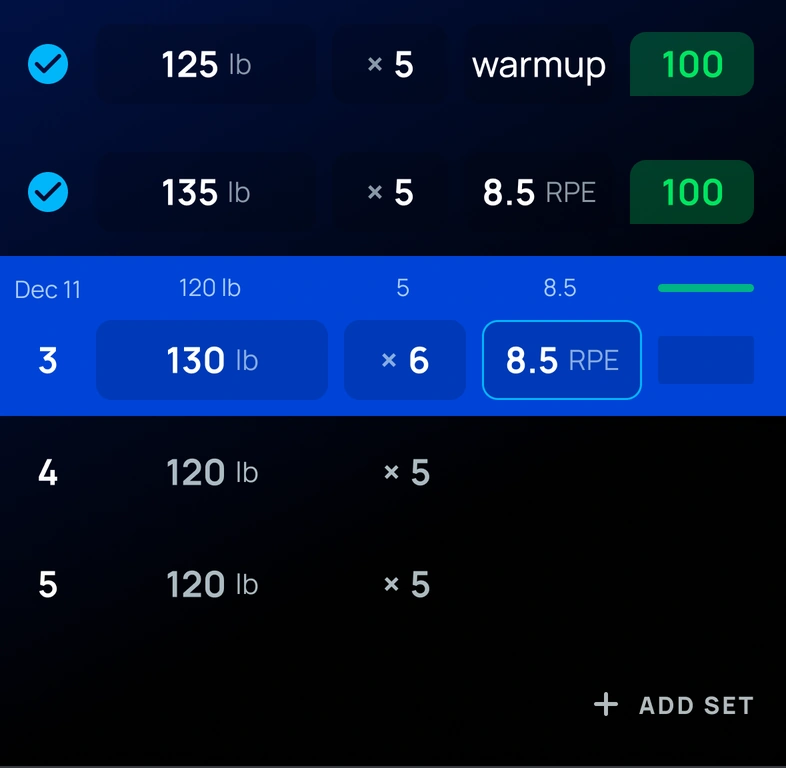
Weight, reps, RPE and bar speed land in the log while you rest, with nothing to type

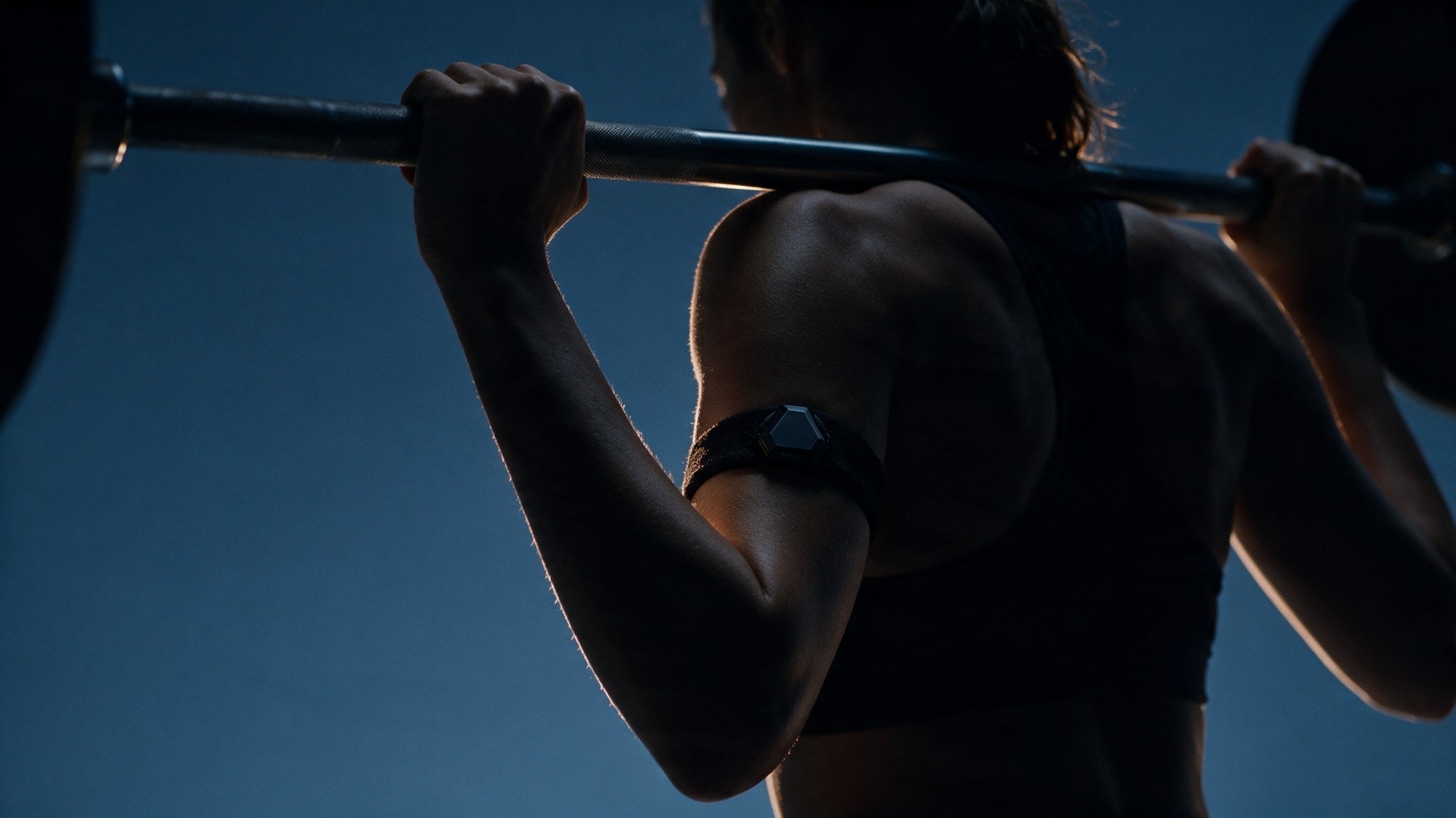
with 4 sensors that read every move, like a coach standing behind you
As seen on
Weight, reps, RPE and bar speed land in the log while you rest, with nothing to type

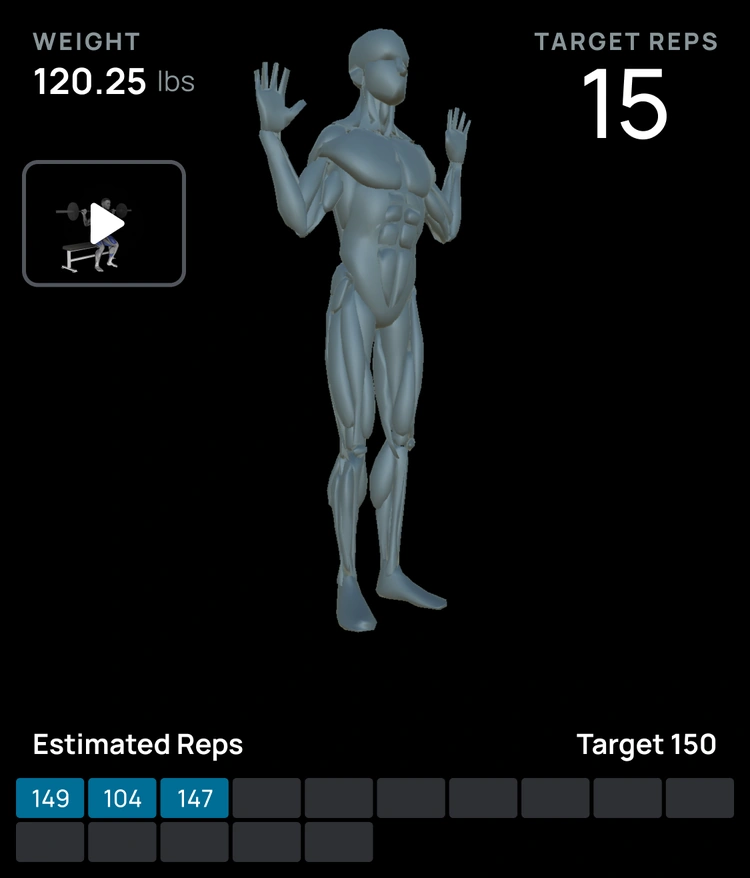
Depth on the squat, setup on the pull, lock out at the top, checked as you lift

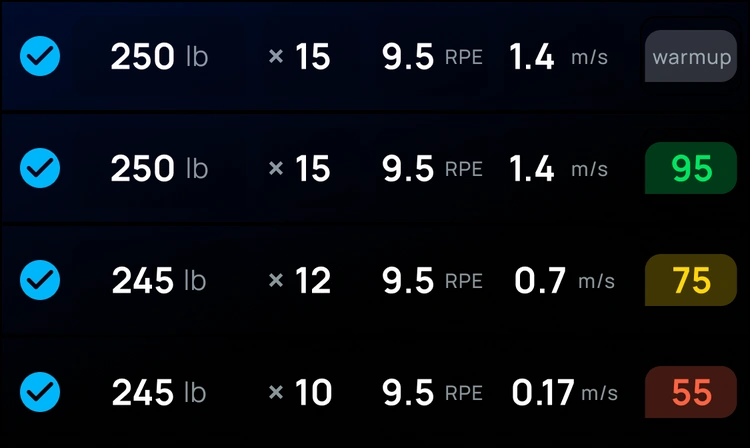
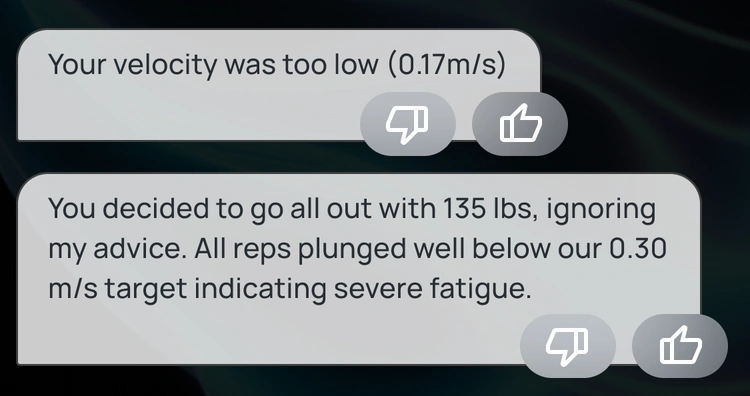
Bar speed falls before you feel it, and that slip is where backs and elbows get hurt

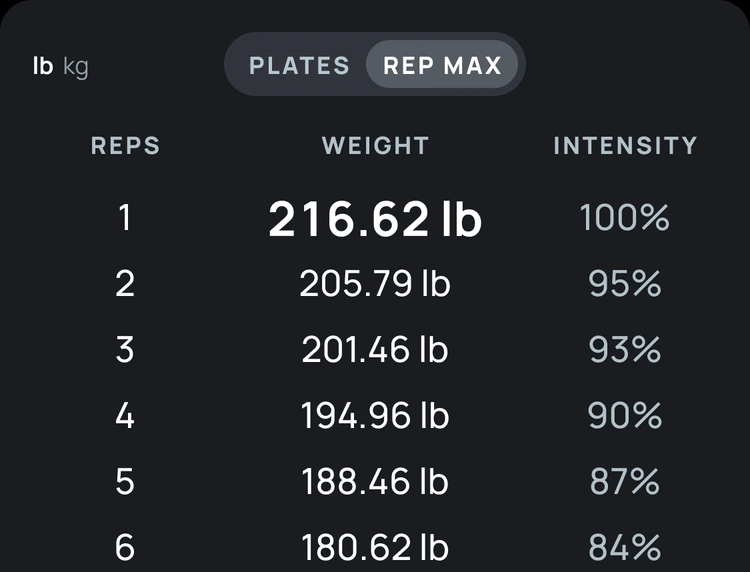
Notch reads how fast the weight moves, picks the load for the next set, and names your weak spot

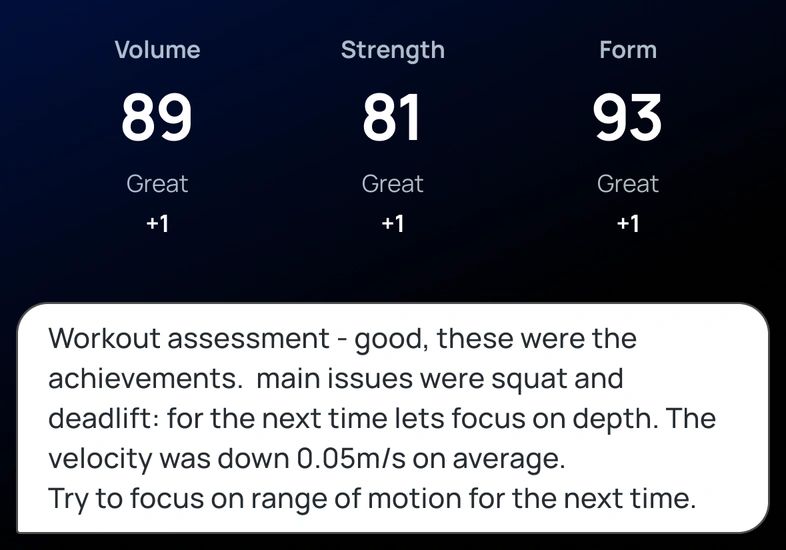
A paragraph at the end of the workout naming what held up, what slipped and what to do next time

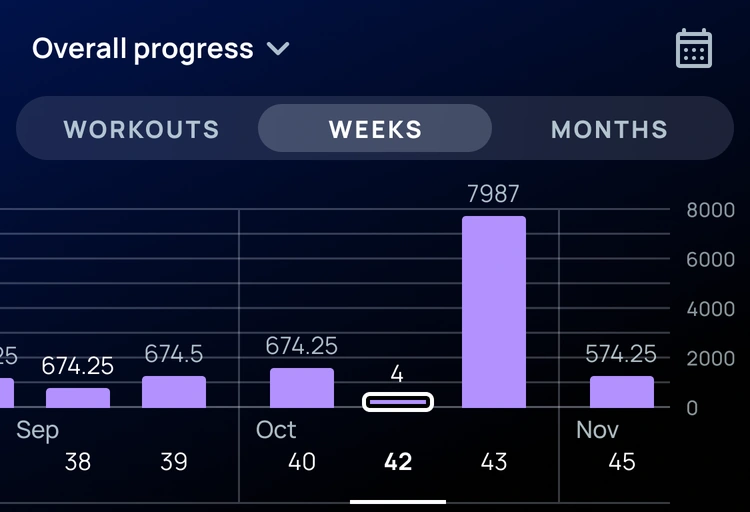
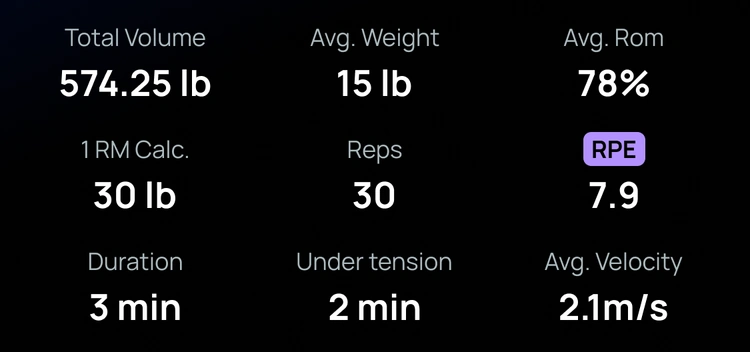
RPE, rest and time under tension on every set, from workout to workout and block to block

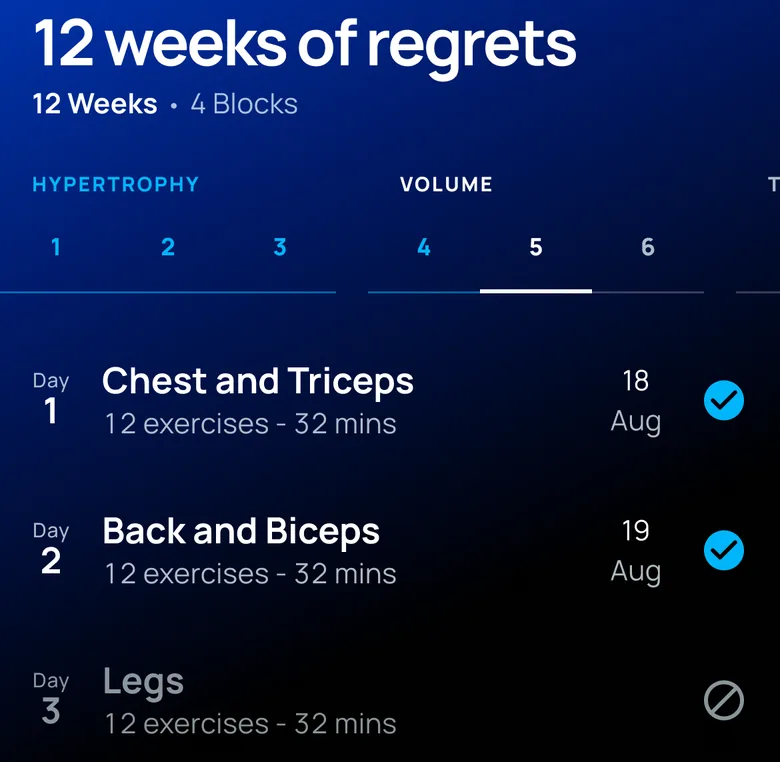
12 weeks in 4 blocks, hypertrophy to strength, each day listed with its exercises and minutes
 ,
a cluster of motion
,
a cluster of motion  sensors takes 150+ measurements on a single rep,
from 4 points on your body,
folded into the 4 numbers
that tell you what to change
sensors takes 150+ measurements on a single rep,
from 4 points on your body,
folded into the 4 numbers
that tell you what to changeHow far you actually moved, reported as a percentage of the full range
How fast the weight moved, in metres per second, and it drops before you feel tired
How long the muscle was actually working, counted across the whole set
150+ measurements folded into a single answer: was that a good rep or not
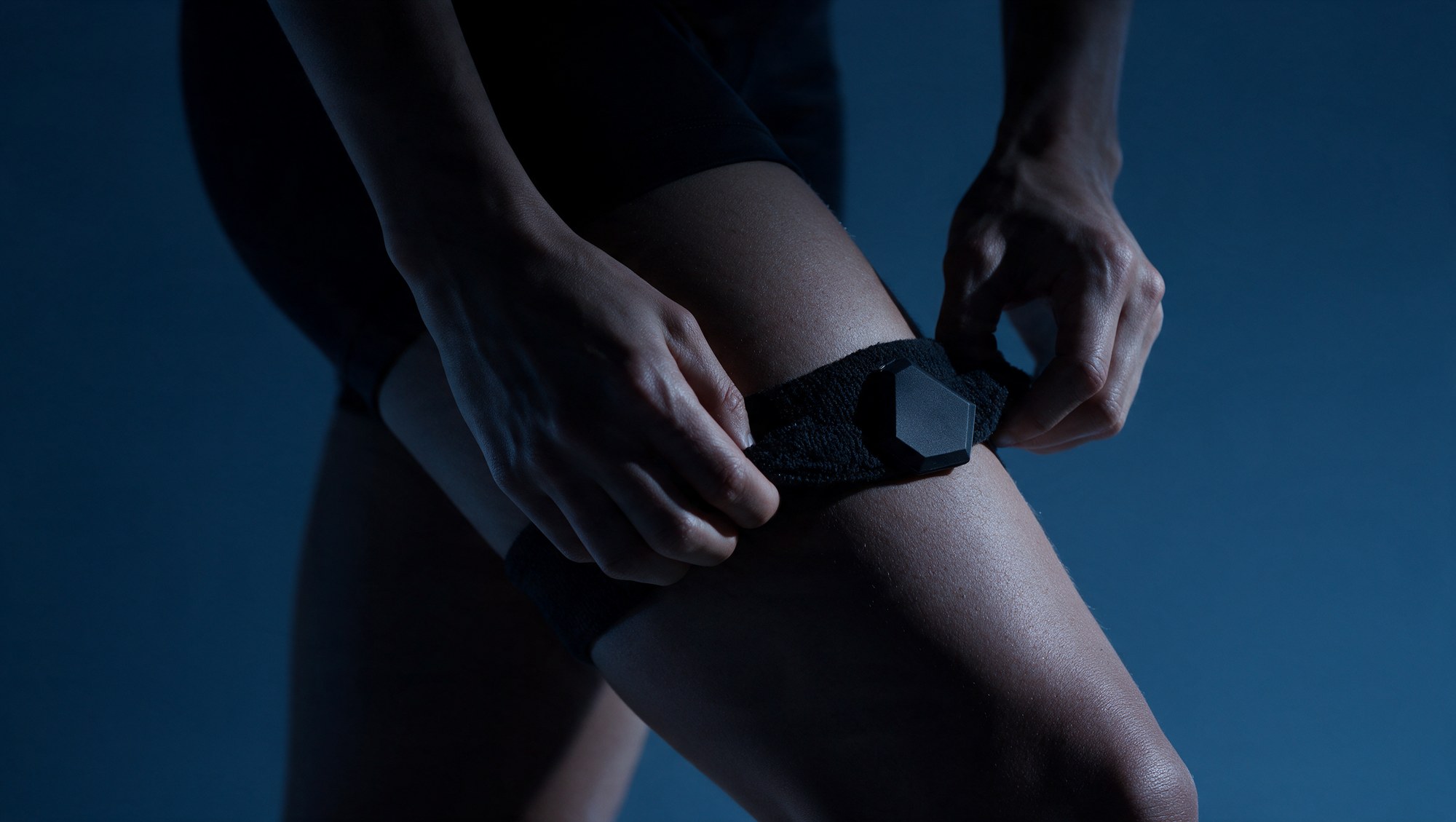
Put the sensors on. 4 sensors go on the upper arm, the thigh, the chest and the back of the hip. The straps are mesh, and the chest sensor sits in the t-shirt.
4 sensors go on the upper arm, the thigh, the chest and the back of the hip. The straps are mesh, and the chest sensor sits in the t-shirt.
The next weight comes from how fast the last set moved, so the load rises the moment you are ready.
Form is checked every rep, and a slowing bar is caught before the rep that costs a back or an elbow.
The same correction on every rep until the good rep is the one you do without thinking.
I've squatted for 20 years and was sure my depth was fine. It was fine on 2 reps out of 3.

Mark
11 months with Notch
My deadlift was stuck at 225 for most of last year. Notch kept showing the bar slowing down on my third set, so I started resting longer between sets. Pulled 245 last week.

Priya
7 months with Notch
I hurt my lower back 2 years ago, and when I came back every set felt like a guess. Was that rep fine, or was I just nervous? Now I check the score before the weight goes up. 5 months in and my back has been fine.

Daniel
5 months with Notch
Almost everything about effort and form is lost the moment a set ends. Notch was built to keep it, on analysis published in peer-reviewed journals.
peer-reviewed papers in biomechanics and healthcare
motion parameters read on a single rep, every rep
generations of the sensor with the shape unchanged
Published in


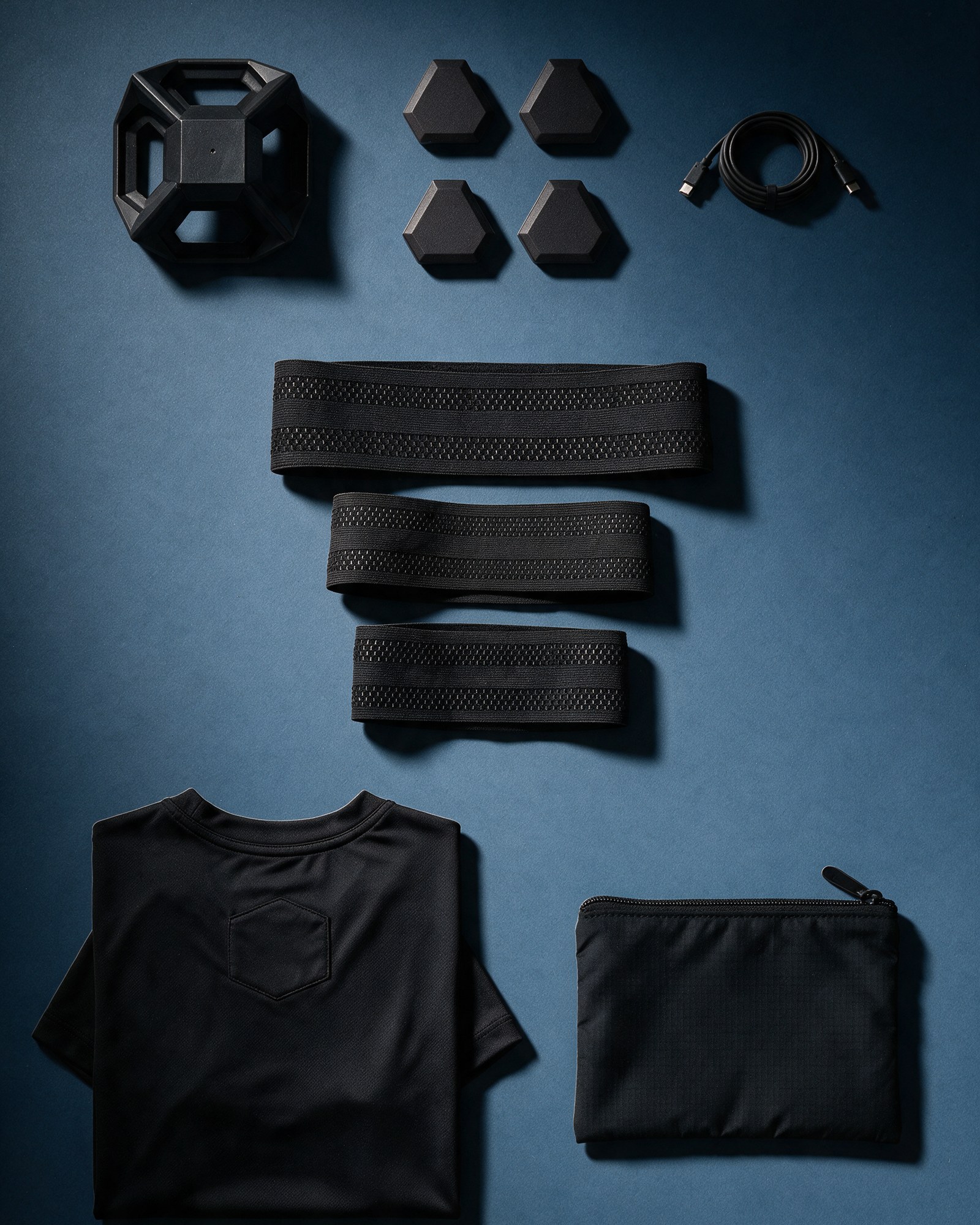
1 price for the hardware and your first year in the app. Shipping is free.
About $1.10 a day for the first year.
After the first year the app continues on a yearly or monthly plan. Today the app is for iPhone.
| Strong, Fitbod | Whoop | Notch | |
|---|---|---|---|
| Where the data comes from | What you type after a set | A strap on the wrist | 4 sensors on the body |
| What it sees in a rep | Sets, reps and weight | Heart rate and strain | Depth, bar speed, time under tension |
| What it tells you | Sets and reps over time | Recovery and sleep | A score and what to change |
| Who picks the next weight | You do | Not covered | The app, from bar speed |
| Watch the movement back | No | No | Any rep, in 3D |


